
Advanced Heat Exchanger Design for High-Pressure Refinery Applications
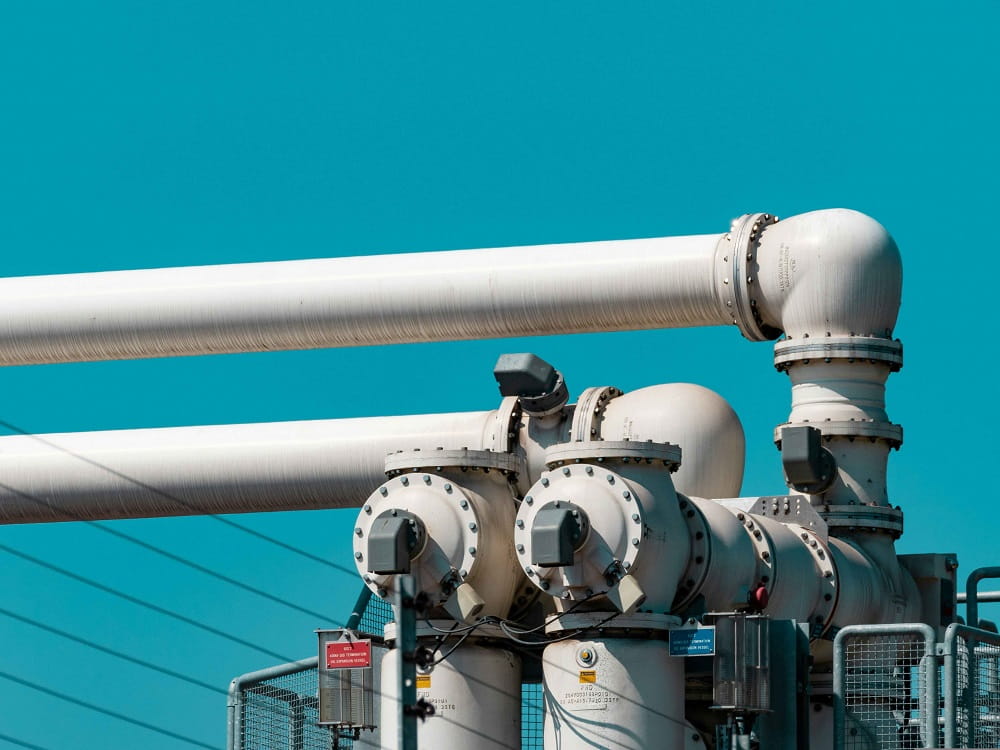
Heat exchangers are the workhorses of modern refineries and petrochemical plants. They transfer thermal energy between fluids, enabling critical processes such as crude oil distillation, catalytic cracking, and hydrotreating. As operating conditions become more demanding — with temperatures exceeding 600°C and pressures rising above 100 bar — the need for advanced heat exchanger design has never been greater.
Shell-and-Tube vs. Plate Heat Exchangers
Two primary designs dominate the refinery landscape: shell-and-tube and plate heat exchangers. Shell-and-tube exchangers remain the industry standard for high-pressure, high-temperature applications due to their robust construction and proven reliability. They can handle pressures up to 100 bar and temperatures exceeding 600°C, making them ideal for critical refinery services.
💡 Key Insight: Modern shell-and-tube heat exchangers can achieve thermal efficiencies exceeding 95% when properly designed with optimized baffle spacing and tube arrangements.
Plate heat exchangers, on the other hand, offer superior heat transfer coefficients and a more compact footprint. They are increasingly used in lower-pressure applications (typically below 30 bar) where space is at a premium and frequent cleaning is required. New developments in plate technology, including laser-welded plates and advanced gasket materials, are pushing the boundaries of pressure and temperature capabilities.
Materials Selection for Extreme Conditions
The choice of materials is critical in high-pressure heat exchanger design. Carbon steel remains the most common material for shell-and-tube exchangers, but stainless steels (304L, 316L, and duplex grades) are preferred for corrosive services. For the most demanding applications — involving high-temperature hydrogen service or sour crude processing — nickel-based alloys such as Inconel 625 and Hastelloy C-276 are essential.
- Corrosion resistance at elevated temperatures
- Creep strength for long-term operation above 500°C
- Resistance to hydrogen embrittlement
- Thermal expansion compatibility between tube and shell materials
- Weldability and fabricability
Advanced Design Techniques
Computational Fluid Dynamics (CFD) has revolutionized heat exchanger design. Engineers can now simulate fluid flow and heat transfer with remarkable accuracy, optimizing baffle spacing, tube layout, and inlet/outlet nozzle positions to minimize pressure drop and maximize heat transfer. Finite Element Analysis (FEA) is also used to validate mechanical integrity under extreme pressure and temperature conditions.
⚙️ CFD Optimization: Modern CFD tools can reduce heat exchanger weight by up to 20% while maintaining or improving thermal performance — resulting in significant cost savings for large refinery projects.
Future Trends
The future of heat exchanger technology is being shaped by several emerging trends. Additive manufacturing (3D printing) is enabling the creation of complex internal geometries that were previously impossible to manufacture. This allows for enhanced heat transfer surfaces and more efficient designs. Additionally, the integration of smart sensors and IoT connectivity is enabling real-time monitoring of heat exchanger performance, facilitating predictive maintenance and reducing unplanned downtime.
At Dornika Energy, we stay at the forefront of these developments, providing our clients with the most advanced heat exchanger solutions available. Whether you need a custom shell-and-tube exchanger for a high-pressure refinery application or a compact plate heat exchanger for a petrochemical process, our team of experts is ready to assist you.