Selecting the wrong valve is one of the most expensive mistakes an engineering or procurement team can make on an oil, gas, or petrochemical project. A misapplied valve can mean leaks, unplanned shutdowns, safety incidents, or a costly re-order months into a project. The good news: valve selection follows a repeatable, standards-based process once you know what to look for.
This guide walks through the main valve types used in industrial piping, the technical criteria that determine the right choice, the standards your specification should reference, and the mistakes that most often lead to rework.
Why Valve Selection Matters
Valves control, isolate, and protect the flow of fluids through a process system. In oil, gas, and petrochemical facilities, they operate under demanding conditions — high pressure, extreme temperature, corrosive media, and continuous cyclic duty. The right valve, correctly sized and rated, keeps a plant running safely for decades. The wrong one becomes a recurring maintenance liability from day one.
Main Valve Types Explained
Gate Valves
Gate valves use a sliding gate that lifts clear of the flow path when fully open, giving a straight-through bore with minimal pressure drop. They are built for on/off isolation, not throttling — partial opening causes vibration and accelerated seat wear. Gate valves are a standard choice for pipeline isolation and tank farm service.
Ball Valves
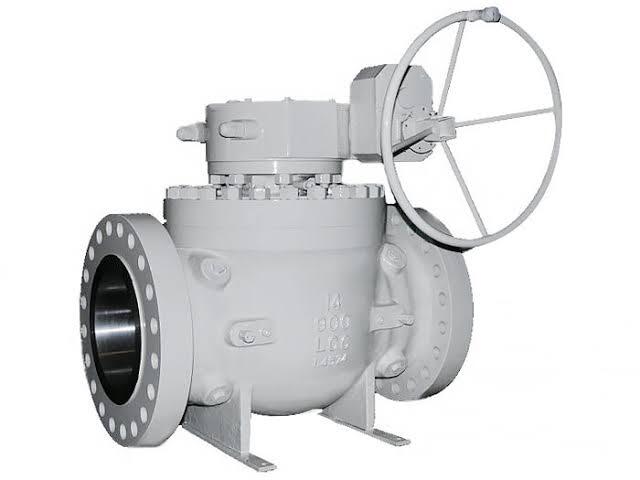
Ball valves use a rotating bored ball to open or close the flow path with a quarter turn. They offer a tight shutoff, fast operation, and low maintenance, which makes them a popular choice for isolation duty across upstream, midstream, and downstream piping — including trunnion-mounted designs for high-pressure pipeline applications.
Globe Valves
Globe valves close using a disc that moves perpendicular to the seat, which creates a longer, more turbulent flow path than a gate valve. That geometry causes a higher pressure drop but gives globe valves excellent throttling characteristics, making them the preferred choice where flow needs to be regulated rather than simply switched on or off.
Check Valves
Check valves allow flow in one direction only and close automatically to prevent backflow, protecting pumps, compressors, and piping from reverse-flow damage. Swing, lift, and dual-plate designs are all common in oil and gas service, selected based on flow velocity, orientation, and space constraints.
Butterfly & Plug Valves
Butterfly valves use a rotating disc and are compact, lightweight, and cost-effective for large-diameter, low-pressure lines such as cooling water or utility service. Plug valves, with a cylindrical or tapered plug, offer a straight-through bore and reliable sealing for slurry, corrosive, or abrasive services.
| Valve Type | Primary Function | Best For |
|---|---|---|
| Gate | On/off isolation | Pipelines, tank farms |
| Ball | Tight, fast isolation | High-pressure pipelines |
| Globe | Flow throttling | Control & regulation service |
| Check | Backflow prevention | Pump & compressor discharge |
| Butterfly | Compact isolation/throttling | Large-diameter, low-pressure lines |
Key Selection Criteria
Beyond valve type, five factors determine whether a valve will perform reliably over its service life:
- Pressure & temperature rating — the valve's class (e.g. ASME Class 150 to 2500) must exceed the maximum operating and design conditions of the line, with margin for surge and upset conditions.
- Material compatibility — body, trim, and seat materials must resist the process fluid's corrosivity, abrasiveness, and temperature without degrading seal integrity.
- Flow control requirement — decide whether the application needs simple on/off isolation or precise throttling, since this alone rules certain valve types in or out.
- Actuation type — manual, gear-operated, pneumatic, hydraulic, or electric actuation should match the required response speed, duty cycle, and available utilities.
- Sizing — an oversized valve wastes capital and may not seat properly at low flow; an undersized valve creates excessive pressure drop and erosion.
Not sure which valve fits your process conditions?
Send us your line data (pressure, temperature, fluid, and pipe size) and our engineering team will recommend a valve type, material, and standard.
Request a Consultation →Standards & Certifications
Referencing the correct standard in your specification avoids ambiguity between supplier and buyer, and ensures the valve is compatible with the rest of the piping system:
- API 600 / API 602 — design and construction of steel gate valves for petroleum and natural gas industries.
- API 6D — pipeline valve specification covering ball, gate, plug, and check valves for pipeline service.
- ASME B16.34 — pressure-temperature ratings, materials, and testing for flanged, threaded, and welded end valves.
- ANSI/ASME B16.10 & B16.5 — face-to-face dimensions and flange rating standards used for interchangeability.
- API 598 — inspection and testing requirements (shell, seat, and backseat tests) for valves prior to shipment.
Common Mistakes to Avoid
- Using a gate or ball valve for throttling duty, which accelerates seat wear and causes vibration.
- Specifying pressure class based on line size alone instead of actual design pressure and temperature.
- Overlooking seat and trim material compatibility with sour, corrosive, or abrasive media, leading to premature failure.
- Choosing the lowest-cost valve without verifying documentation, traceability, and third-party test certificates.
- Ignoring spare-parts availability, which can turn a minor repair into weeks of downtime.
"The cheapest valve on the quote is rarely the cheapest valve over the life of the plant — factor in seat replacement, actuator compatibility, and lead time on spares before you decide."
Maintenance & Spare Parts
Even a correctly specified valve needs a maintenance plan. Critical isolation and safety valves are typically inspected during scheduled plant turnarounds, often every one to three years, while high-cycle control valves may require more frequent checks based on actual duty. Keep a stock of common wear items — seats, seals, gaskets, and stem packing — so a routine repair does not become an unplanned shutdown while parts are sourced.

Choosing a Trusted Supplier
Dornika Energy Pars supplies industrial valves — gate, ball, globe, and check — alongside turbines, pumps, heat exchangers, and instrumentation to oil, gas, petrochemical, and energy projects. Every valve is sourced from vetted global manufacturers and can be supplied against project datasheets and the relevant API, ASME, or ANSI standard, with full documentation and after-sales support.
Whether you are finalizing a piping specification or replacing a failed valve on short notice, our engineering team can help you cross-reference requirements against available stock and lead times.