If you work with industrial piping, valves, flanges, or fittings, the letters "ANSI" show up constantly — on datasheets, drawings, valve body markings, and supplier catalogs. But "ANSI standard" is a broad, often misused term that actually covers dozens of separate documents, each governing a different dimension, rating, or test requirement. This guide brings the most commonly searched ANSI/ASME topics together in one reference, so whether you landed here looking for a specific standard number, a pressure class, or a comparison with API or DIN, you will find the answer on this page.
What Is ANSI?
ANSI (American National Standards Institute) is a private, non-profit organization founded in 1918 that oversees the creation of voluntary consensus standards in the United States. ANSI does not write the technical content of piping and valve standards itself — it accredits standards-developing organizations, and approves their documents once they follow ANSI's open, consensus-based process.
For piping components, the technical content is written by ASME (American Society of Mechanical Engineers). Once approved through ANSI's process, the document carries both names — for example ANSI/ASME B16.5 — which is why engineers use "ANSI standard" and "ASME standard" almost interchangeably when talking about flanges and valves.
Why ANSI Standards Matter in Oil, Gas & Petrochemical Projects
ANSI/ASME standards create a common technical language between engineers, manufacturers, and inspectors across different countries and suppliers. A flange made to B16.5 Class 300 by one manufacturer will match the dimensions, bolt pattern, and pressure-temperature rating of a Class 300 flange from another manufacturer thousands of kilometers away. That interchangeability is what allows global procurement, multi-vendor projects, and long-term spare parts availability to work reliably.
Core ANSI/ASME Standards for Piping & Valves
Below are the standards most frequently referenced on piping datasheets, drawings, and purchase specifications in oil, gas, and petrochemical projects.
Pipe Flanges and Flanged Fittings
Covers dimensions, tolerances, pressure-temperature ratings, materials, and testing for pipe flanges and flanged fittings from NPS 1/2 through NPS 24, in pressure classes 150 through 2500. This is the single most-referenced flange standard in the industry.
Face-to-Face and End-to-End Dimensions of Valves
Defines standardized face-to-face (flanged) and end-to-end (welded/threaded) dimensions for valves, ensuring a replacement valve from a different manufacturer fits the same pipe spool without rework.
Forged Fittings, Socket-Welding and Threaded
Covers ratings, dimensions, and markings for small-bore forged steel fittings — elbows, tees, couplings — used in socket-weld and threaded connections, common throughout instrumentation and small-diameter process piping.
Gaskets for Pipe Flanges
B16.20 covers metallic and semi-metallic gaskets (spiral-wound, ring joint), while B16.21 covers nonmetallic flat gaskets. Both are dimensioned to match B16.5 flanges and are selected based on pressure class, temperature, and fluid compatibility.
Buttwelding Ends
Specifies the preparation of pipe, valve, flange, and fitting ends for buttwelding, including bevel geometry, so that components from different manufacturers weld together with a consistent, weldable joint.
Valves — Flanged, Threaded, and Welding End
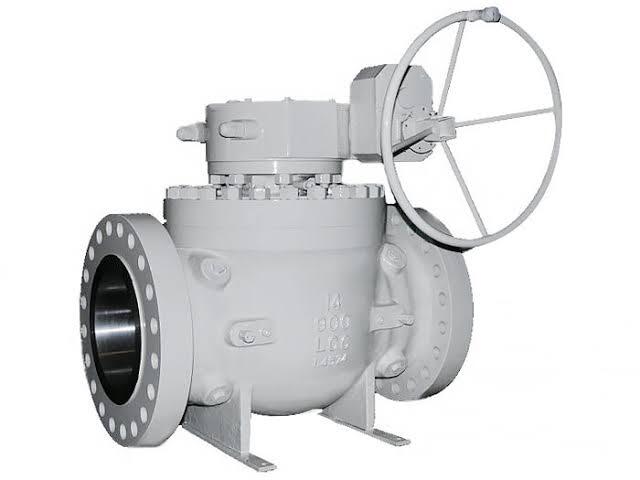
The core valve standard, defining pressure-temperature ratings, materials, dimensions, and required testing for flanged, threaded, and welding-end steel and alloy valves. Virtually every industrial valve datasheet references B16.34 for its rating table.
Large Diameter Steel Flanges (NPS 26–60)
Extends flange dimensional and pressure-temperature coverage beyond B16.5's 24-inch limit, split into Series A (heavier, closer to API 605) and Series B (lighter, closer to MSS SP-44) — commonly needed on large pipeline and tank connections.
Process Piping
The governing code for piping systems in petroleum refineries, chemical plants, and gas processing facilities — covering design, materials, fabrication, inspection, and testing of the piping system as a whole, not just individual components.
Power Piping
Applies to piping in electric power generation plants, geothermal heating systems, and related facilities, with different design margins and requirements than B31.3 process piping — the two are often confused but are not interchangeable.
Welded and Seamless Pipe Dimensions
B36.10M covers wall thickness and outside diameter (Schedule 10 through 160) for carbon and alloy steel pipe, while B36.19M covers the equivalent for stainless steel pipe — the basis for every "pipe schedule" reference on a piping drawing.
ANSI Pressure Classes Explained (150–2500)
One of the most searched questions is what an ANSI pressure "class" actually means. The class number (150, 300, 600, 900, 1500, 2500) is not a direct psi rating — it is a reference designation defined in ASME B16.5. Each class carries a maximum allowable working pressure that decreases as temperature increases, and the exact figure depends on the material group of the flange or valve.
| ANSI Class | Approx. Rating at 100°F (Group 1.1 CS) | Typical Use |
|---|---|---|
| 150 | ~285 psi | Low-pressure utility & cooling lines |
| 300 | ~740 psi | General process piping |
| 600 | ~1,480 psi | Higher-pressure refinery service |
| 900 | ~2,220 psi | High-pressure gas & pipeline service |
| 1500 | ~3,705 psi | Wellhead & high-pressure separation |
| 2500 | ~6,170 psi | Extreme high-pressure wellhead service |
Figures above are approximate, for Group 1.1 carbon steel (e.g. A105) at 100°F, for general orientation only. Always confirm the exact allowable pressure against the current ASME B16.5 rating table for the specific material and design temperature of your project.
ANSI vs API vs DIN vs JIS Standards
Procurement teams sourcing internationally often need to compare standards systems. Here is how the major ones relate to one another:
| System | Origin | Focus |
|---|---|---|
| ANSI/ASME | United States | Dimensional & pressure-temperature standards for piping components (B16 series), plus piping codes (B31 series). |
| API | United States (petroleum) | Oil & gas-specific design, materials, and testing (e.g. API 600, API 6D); often references ANSI/ASME dimensional standards. |
| DIN / EN | Germany / Europe | European flange (EN 1092) and valve (EN 12516) standards using PN (metric bar) pressure ratings instead of ANSI class numbers. |
| JIS | Japan | Japanese Industrial Standards, with a separate flange rating system (JIS 5K/10K/16K/20K) common on equipment sourced from Japanese manufacturers. |
Mixing systems on one project — for example bolting a DIN PN-rated flange to an ANSI Class-rated flange — is a common and costly design error, since bolt circles, hole counts, and gasket seating surfaces are usually not interchangeable between systems.
Cross-referencing standards for a mixed-vendor project?
Send us your line list and we'll confirm which ANSI/ASME (or equivalent) standard applies to each component before you place an order.
Request a Consultation →How to Read Flange & Valve Markings
ANSI/ASME B16.34 and B16.5 both require permanent markings on the component body so it can be identified in the field without paperwork. A typical valve or flange marking includes:
- Manufacturer's name or trademark
- Pressure class (e.g. 150, 300, 600)
- Material grade (e.g. WCB, A105, LF2)
- Nominal size (e.g. 4" or DN100)
- Heat/lot number for material traceability
Before installing or accepting equipment, cross-check these markings against the purchase order and material test certificate — a mismatch between the marking and the certificate is one of the most common findings during pre-shipment inspection.
Common Specification Mistakes
- Quoting a pressure class without specifying the material group, making the actual allowable pressure impossible to verify.
- Confusing B31.1 (power piping) with B31.3 (process piping) — the design margins and allowable stresses differ.
- Assuming ANSI Class and DIN PN or JIS K ratings are directly interchangeable without checking bolt circles and hole counts.
- Overlooking that pressure ratings drop at elevated temperature — a Class 300 valve rated for 740 psi at 100°F is rated far lower at 500°F.
"A pressure class number means nothing on its own — it only becomes a real number in psi once you pair it with a material group and a design temperature."

Sourcing ANSI-Compliant Equipment
Dornika Energy Pars supplies valves, flanges, and related piping components from vetted global manufacturers who produce to ANSI/ASME standards including B16.5, B16.34, and B31.3, alongside turbines, pumps, heat exchangers, and instrumentation for oil, gas, petrochemical, and energy projects. Every order can be supplied with full material test certificates and traceable documentation matching the standard called out in your specification.